Germany Has the Infrastructure. Now Hospitals Need to Use the Data.
- Nisha Gautam
- September 24, 2026
- TECHTALK
- Data2Value, Data2ValueExecutiveDialogue
- 0 Comments
Germany has spent years building an infrastructure that many people outside the country know surprisingly little about: Data Integration Centers, known by their German abbreviation DIZ (Datenintegrationszentren). The 5th Frankfurter eHealth Day of the University Center for Digital Healthcare (UCDHC) at Frankfurt University Medicine offered an interesting opportunity to look behind the scenes of their DIZ – and at a much bigger question facing German healthcare: What happens with the data once the infrastructure is there?
The DIZ were developed across Germany’s university hospitals to solve a fundamental problem. Hospitals generate enormous amounts of data every day, but those data sit across different clinical systems, use different structures and were primarily created to support the treatment of individual patients. Using them across thousands of patients – for research, quality improvement, clinical management or other secondary purposes – requires an entirely different infrastructure.
That is what a DIZ provides.
Building the layer underneath data use
In his presentation about “Structures and Services of the Data Integration Center”, Dr. Oliver Vogel, Project Coordinator for Data Science at the DIZ, explained how the DIZ connects different source systems across the hospital. These include the main hospital information system as well as specialized clinical systems. Rather than simply removing the data from their original environments, the DIZ creates access to these sources and produces representations of the data that can be combined and used for secondary purposes.
Behind this sits a substantial technical operation: extraction and transformation pipelines, data standardization, pseudonymization and anonymization, repositories, infrastructure, archiving, deletion processes, documentation and quality management.
Researchers requesting data may need ethics and data-protection approvals. Applications are managed through a dedicated portal, with a transfer unit helping users formulate requests. Different governance structures become involved depending on whether data is being requested for research, clinical purposes, quality management or controlling.
In other words, the DIZ is not simply a data warehouse. It is a combination of data infrastructure, integration capability, governance and service organization.
From local infrastructure to a national network
The model becomes particularly interesting when looking beyond an individual hospital. Germany’s university hospitals are connected through the Research Data Portal for Health (FDPG), allowing researchers to request data for multicenter projects. Frankfurt therefore processes not only its own local requests but also participates in projects originating elsewhere in Germany.
Dr. Vogel highlighted the scale of that network: 36 university hospitals are connected to the FDPG. At Frankfurt itself, however, around 90 percent of current requests still originate locally.
That distinction matters: Germany has created the foundations for a federated national health data ecosystem while simultaneously building substantial data capabilities inside individual university hospitals. The question is how much value can now be generated from that infrastructure.
The success of the infrastructure creates a new problem
Frankfurt is already seeing increasing demand for data. That is good news. Data infrastructure is ultimately built to be used.
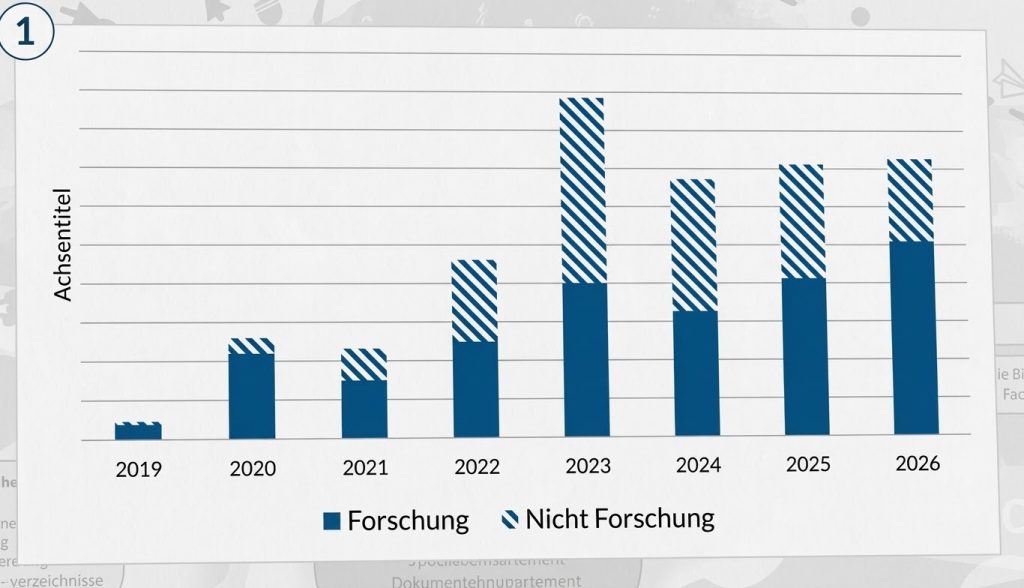
But greater demand also exposes the limitations of processes that still require considerable manual work. The Frankfurt team described automation and standardization as important priorities for the next phase – including more standardized datasets and greater automation of recurring steps in the request process.
This represents an important transition: The first phase was about making data available. The next will increasingly be about making data use scalable.
If every new question requires an individual request, manual processing and a bespoke dataset, the number of people who can realistically work with clinical data remains limited – regardless of how sophisticated the underlying infrastructure becomes.
What comes next
The Frankfurt session also made clear where the Data Integration Center is heading next.
- First, the team wants to automate and standardize more of its processes. Request volumes are rising, and many steps still require manual work. Greater standardization and automation are therefore intended to reduce waiting times and make the process more scalable.
- Second, the technical infrastructure will continue to expand. Additional clinical systems still need to be connected, and the underlying infrastructure is being further developed to support a broader range of use cases.
- Third, the DIZ is already used for more than research. Frankfurt also provides data for clinical questions and hospital controlling, and non-research requests have at times accounted for a substantial share of demand.
- And finally, the discussion turned to a clinical data reporting tool. The Frankfurt team confirmed that this is already an area of interest, sees clear value in it, and is working on how such capabilities could be implemented in practice.
Taken together, these points suggest a pragmatic next phase: making the existing DIZ model more scalable, broader in scope and easier to use across the hospital. The DIZ of the future may be less defined by how much data it integrates and more by how effectively an organization can use the data it has integrated.
And Frankfurt keeps investing in its digital foundation. Earlier this year, University Medicine Frankfurt began operating its own private cloud, with clinical systems scheduled to migrate progressively through 2028 and infrastructure designed to support applications including telemedicine and AI.
The pieces are therefore increasingly coming together: clinical systems, integration, governance, computing infrastructure and AI. The challenge now is to connect those pieces in a way that changes everyday healthcare.
For international observers, Germany’s DIZ experience offers an important lesson. Building a health data ecosystem takes years of largely invisible work. Standards, interfaces, governance and privacy mechanisms are not the exciting part of digital health, but without them, sophisticated analytics and AI have little to stand on. The next measure of success will not be how much data has been integrated. It will be how many people can use it – and what they can achieve with it.
The 5th Frankfurter eHealth Day, held on 23.09.2026, was organised by the University Center for Digital Healthcare (UCDHC) of Frankfurt University Medicine. Dr Michael von Wagner is Managing Director of the University Center for Digital Healthcare (UCDHC), Chief Medical Informatics Officer and Medical Lead of the Staff Unit for Medical Information Systems and Digitalisation at University Medicine Frankfurt. Prof Dr Holger Storf is Head of the Institute of Medical Informatics (IMI) and Head of the Data Integration Centre (DIZ) at Goethe University Frankfurt.
Written with the assistance of AI.