Hospital Resilience: Learnings from Sheba’s Underground ER
- Nisha Gautam
- October 23, 2026
- TECHTALK
- Data2Value, Data2ValueExecutiveDialogue
- 0 Comments
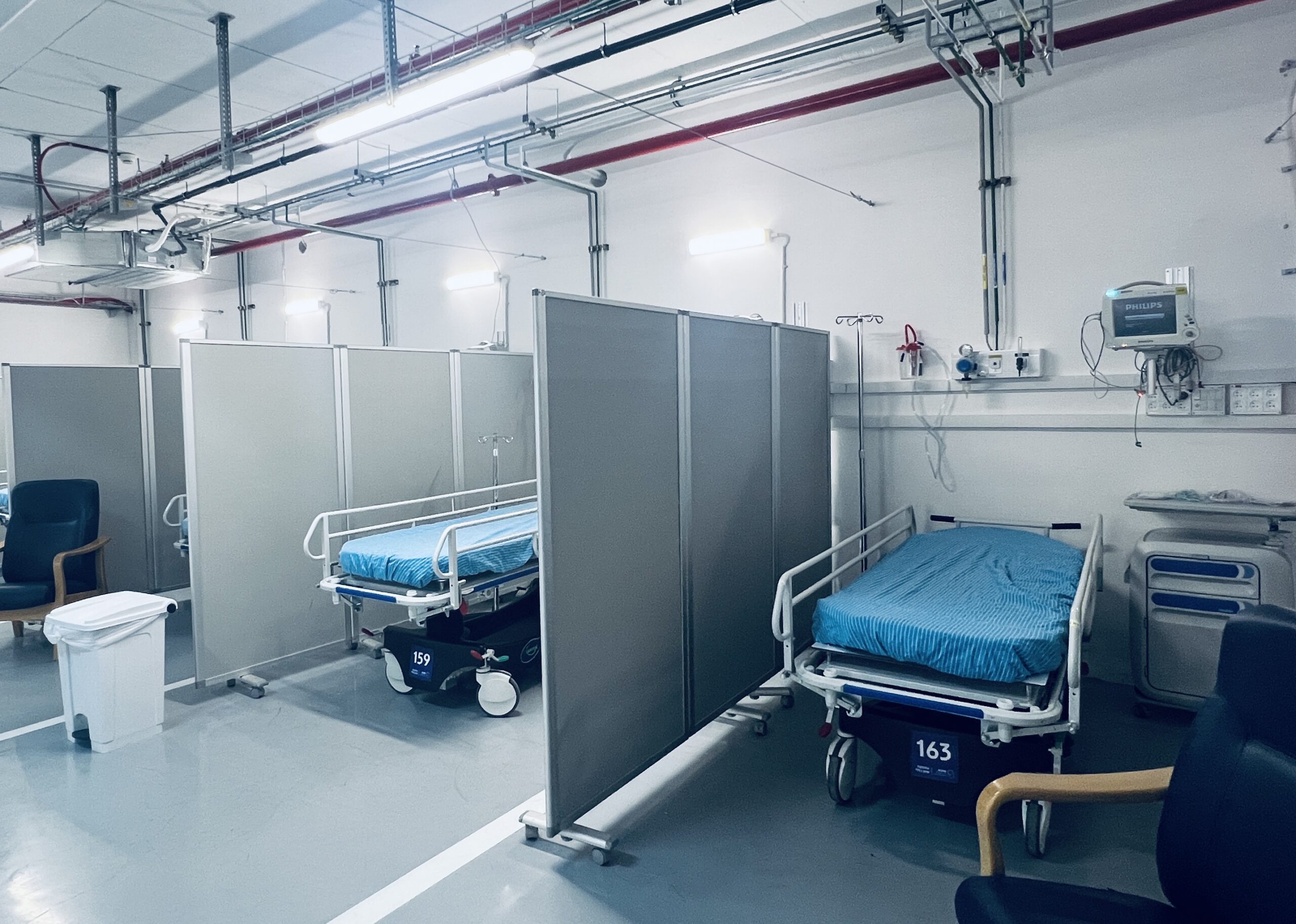
What does it take for a hospital to keep treating patients when missiles fall, earthquakes hit, elevators fail or IT systems come under attack? At ARC Summit 2026 in Tel Aviv, international participants toured Sheba Medical Center’s Underground Emergency Department and its field hospital. The answer they heard: resilience is not improvised in an emergency. It is planned, rehearsed and run every day.
The tour offered six lessons for health systems now rethinking their own crisis readiness.
1. Plan for patients, not percentages
Rather than reserving protected beds for an arbitrary share of patients, Sheba starts with the patients themselves. Type A patients are bedridden and cannot be moved; Type B patients can be moved with staff support; Type C patients can relocate on their own. Combined with threat scenarios set by Israel’s Ministry of Health and Home Front Command, this categorization determines how much protected capacity is needed. Protected facilities are designed for Type A and B patients, who may need to stay there for extended periods.
2. Turn everyday infrastructure into protected care space
Sheba calls it dual use: its underground parking garage serves cars on ordinary days and becomes an emergency department when the threat level rises. Every bay is fitted with oxygen, medical gases, vacuum and IT connections, all with backup systems. Ambulances arrive at a designated entrance, where patients are triaged and sent straight to surgery, imaging or inpatient beds. Around four such structures across the campus can be activated, based on a dynamic assessment of the threat.
3. Eliminate single points of failure
After the missile strike on Soroka Medical Center in Beersheba in June 2025, elevators were recognized as a critical vulnerability: blast waves and crowding can disable them exactly when patients must be moved. Sheba’s patient pathways therefore do not depend on elevators and include dedicated stretcher shafts. Infection is another risk in crowded underground units – the team cited measles and tuberculosis – so portable isolation units allow infectious patients to be separated quickly.
4. What works on an ordinary day works in a crisis
Sheba’s Command and Control Center (CCC), introduced about two years ago, works like a war room. It combines real-time data on patients, incoming ambulances and occupancy across all facilities, fed by around 3,000 sensors, so the team can intervene wherever a bottleneck appears. Crucially, the CCC runs every day – which is why it also works in wartime. AI now flags delays automatically – a catheterization lab slow to turn around, a pharmacy behind on chemotherapy – and alerts the responsible manager. For now, a person still makes the final call. Sheba tracks the effect through patient transfers and errors, and early signs show both are falling.
5. Expect a cyberattack with every escalation
In almost every escalation, the team noted, mass-casualty events have come with a cyberattack. The CCC can therefore run fully connected to hospitals nationwide, isolated to Sheba’s own systems, or in a minimal mode covering a single protected area – depending on the risk and on instructions from Israel’s national cyber authorities.
6. Keep mobile reserve capacity
The tour ended at Sheba’s field hospital, which the team presented as an Emergency Medical Team (EMT) Type 2 – the WHO category for teams providing inpatient surgical care. With its own power and water supply, it can be flown abroad for missions of 14 to 21 days or reinforce Israeli hospitals damaged by missiles or earthquakes, set up wherever there is space. It has already operated in Europe: an exhibit on the tour recalled its deployment to Ukraine in 2022.
Resilience Is High on Europe’s Healthcare Agenda
The experience at Sheba reinforces the conclusions of a recent meeting of Lemonmint’s Data2Value Initiative in Copenhagen, Denmark. Focusing on the future of European health systems, more than 60 healthcare leaders discussed how hospitals can strengthen resilience and maintain care during crises. Prof. Dr. Robert Schwab, Commander and Medical Director of Central Hospital Koblenz, Germany, highlighted the need for redundant infrastructure, alternative care capacity, regional cooperation and regularly rehearsed emergency plans.
Resilience is also gaining importance on the European policy agenda. The European Commission’s Preparedness Union Strategy and its initiatives on hospital cybersecurity reflect this shift. Meanwhile, WHO Europe has documented how hospitals in Ukraine maintain essential services even under attack.
Written with the assistance of AI.