“We Need to Turn Research into Value”
- Nisha Gautam
- November 3, 2026
- TECHTALK
- Data2Value, Data2ValueExecutiveDialogue
- 0 Comments
University Medical Center Göttingen CEO Prof. Wolfgang Brück calls for a stronger entrepreneurial mindset, earlier investment, and better ways to turn scientific discoveries into viable healthcare innovations at ARC Summit 2026.
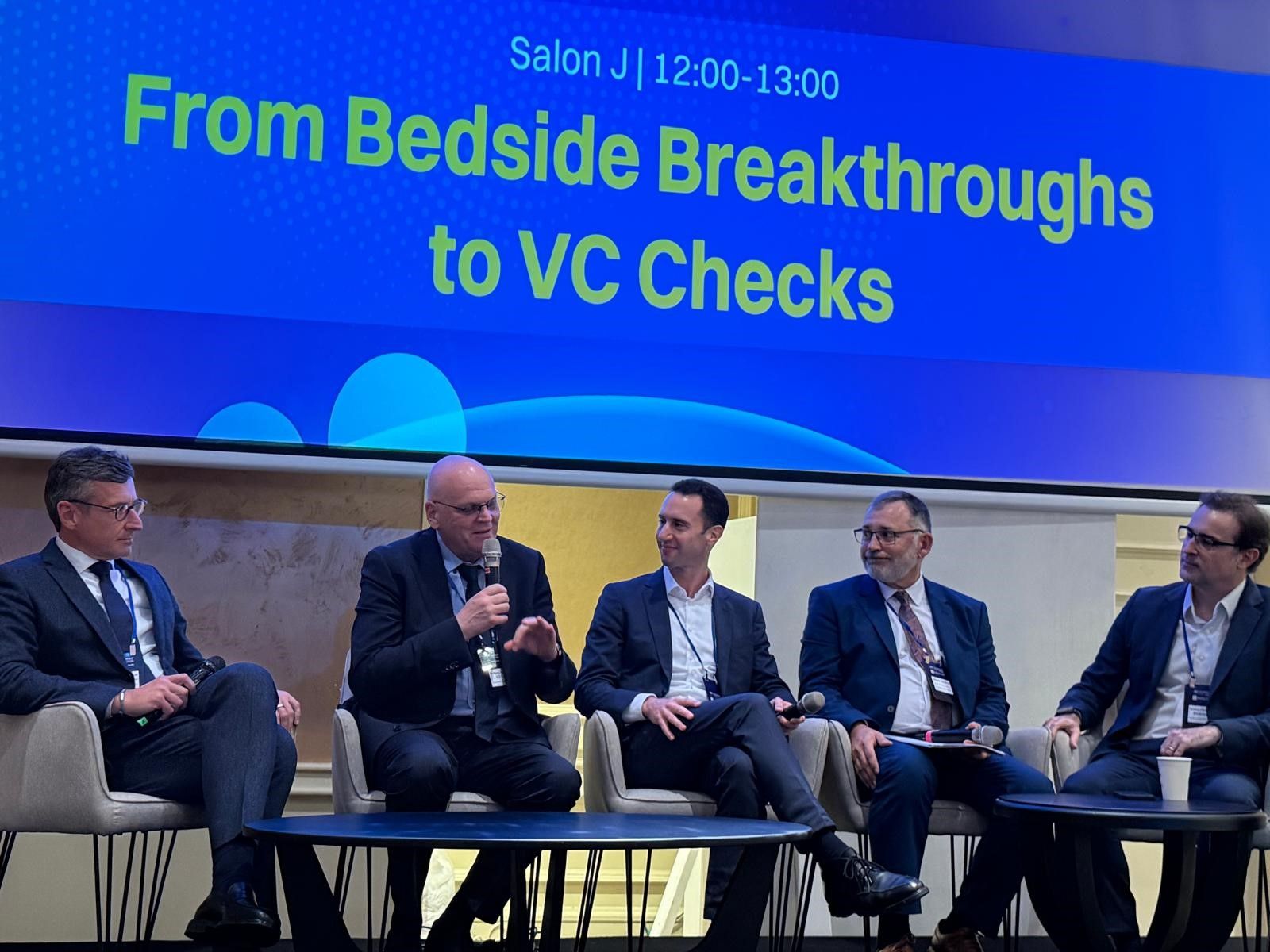
Germany’s academic hospitals need to rethink how they turn scientific excellence into economic and clinical value. Speaking at ARC Summit 2026 in Tel Aviv, Prof. Wolfgang Brück, CEO of University Medicine Göttingen (UMG), called for a fundamental change in how academic institutions support innovation.
“We have to change the mindset,” Brück told an international panel of hospital innovation leaders. He argued that German researchers traditionally focus on academic objectives, supported by public funding, without sufficiently considering the economic potential of their work.
We have to change the mindset. – Prof. Wolfgang Brück, CEO, Univeristy Medical Center Göttingen
Compared with established innovation ecosystems such as Toronto’s University Health Network (UHN), Brück described Germany’s structures for advancing promising technologies as considerably less mature.
Innovation needs maturity, not just startups
Brück was particularly critical of policies that prioritize the creation of new companies without adequately preparing them for success.
Describing the German government’s approach as “start up, start up, start up,” he questioned whether enough attention was being paid to when a scientific discovery is ready to become a company.
Rather than encouraging researchers to establish startups prematurely, UMG is developing structures to validate promising ideas, reduce their risks, and increase their chances of success.
Licensing intellectual property, Brück emphasized, can be a viable alternative to creating a company. The priority should be to develop technologies to the right level of maturity before deciding how to bring them to market.
Bringing private capital into academic innovation
A second priority is access to early-stage financing. Brück argued that university hospitals need relatively modest amounts of funding to validate technologies and reduce investment risks.
“This doesn’t need to be government money,” he stressed, advocating greater involvement of private investors in academic institutions.
Early investment could help researchers test promising concepts, assess their potential, and make informed decisions about which projects warrant further development.
Learning from international innovation ecosystems
The discussion took place during the panel The Provider Playbook, Internal Innovation & Tech Transfer at ARC Summit 2026.
Mark Taylor, Director of Commercialization at Toronto’s University Health Network, described how his institution combines early investment, experienced entrepreneurial teams, and long-term partnerships with its spin-offs.
Avner Shahal, Managing Director of the Charité BIH ARC Innovation Center in Berlin, emphasized the importance of fostering an entrepreneurial culture among clinical, research, and administrative staff.
Karl Reremoser, General Manager of the Innovation Center Maria Middelares (ARC Ghent) in Belgium, outlined how his organization helps transform ideas into minimum viable products and potential ventures.
For Brück, international exchange provides an opportunity to learn from institutions that have already established effective models for supporting researchers and bringing new technologies into practice.
A final point concerned the relationship between hospitals and their researchers. Rather than simply rejecting proposals, Brück emphasized the importance of helping scientists develop their ideas into potentially valuable intellectual property.
“We don’t say no. We try to help them,” he said.
Written with the assistance of AI.